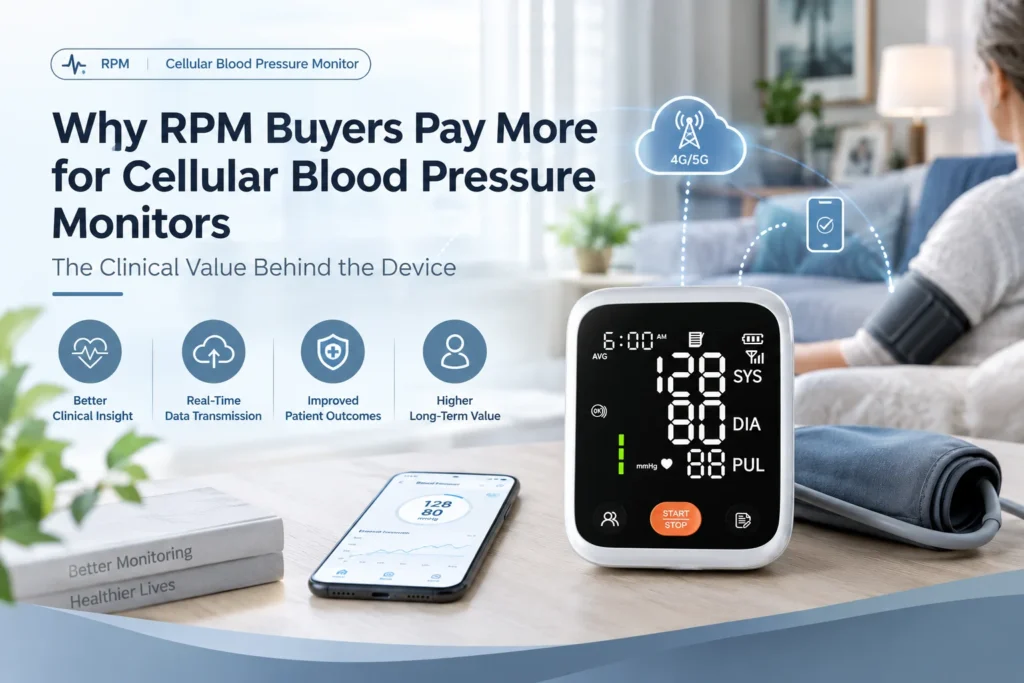

Remote Patient Monitoring (RPM) networks provide massive clinical benefits to healthcare organizations and high-risk chronic patients globally. However, digital health executives frequently encounter a major operational hurdle that stalls program success. Traditional medical sensors require patients to complete complex technical pairing steps before transmitting vitals.
Consequently, confusing setups lower clinical utilization rates and diminish monthly insurance reimbursement collections significantly. Deploying a custom-engineered 4G pulse oximeter array solves this widespread patient compliance bottleneck completely. This technical guide explores how cellular connectivity eliminates tech barriers, drives patient compliance, and secures stable RPM revenue.
1. Eliminating the App Pairing Nightmare for Elderly Patient Populations
Medical device usability dictates how consistently a patient will track their oxygen saturation metrics at home.
 Bluetooth Path: [Put on Sensor] ──> [Open App] ──> [Pair Bluetooth] ──> [Find Wi-Fi] ──> ❌ Sync Fails
 4G Cellular:   [Put on Sensor] ──> [Automatic Measurement] ──> [Direct Cloud Upload] ──> ♻️ 100% Data Flow
Standard Bluetooth vital monitors force elderly individuals to navigate complex smartphone apps and local wireless router settings. This smartphone dependency represents the leading cause of dropping out during initial home health deployments.
In contrast, an advanced 4G pulse oximeter operates on a completely independent cellular data network. The user simply places the device onto their finger to activate the internal optical tracking hardware instantly. The built-in cellular modem beams encrypted oxygen readings directly to the hospital cloud system automatically. This frictionless process requires zero visual screen menus, zero passwords, and zero mobile app downloads.
-3.webp)
2. Quantifying the Real-World Compliance Jump in Cellular Deployments
Moving away from local consumer networks to dedicated cellular hardware triggers immediate, measurable improvements in program participation.
Patient Compliance Curve Over 90 Days:
Bluetooth Sensors: Tracking drops by 45% due to app disconnects.
4G Cellular Modules: Maintains 85%+ consistent daily data streams.
Clinical research shows that cellular-embedded medical hardware yields the highest long-term retention rates among senior citizens. Because senior demographics often lack home broadband connections, local pairing methods frequently fail in rural territories.
By utilizing a pre-activated roaming SIM card, our cellular device bypasses local network gaps completely. Patients can travel comfortably or live in remote areas while maintaining steady data links with their doctors. This reliable connectivity keeps long-term home tracking rates well above 85% across entire patient groups.
3. The Financial Impact: Hitting the Critical 16-Day Insurance Reimbursement Threshold
For healthcare providers, improving daily patient compliance is a vital financial requirement rather than a secondary goal.
 Under 16 Active Days ──> Fails Medicare Billing Compliance ──> ❌ Zero Operational Reimbursement
 Over 16 Active Days  ──> Satisfies CPT Code Requirements    ──> ♻️ Collects Maximum Monthly Care Capital
To bill insurance programs like Medicare successfully, a patient must log physiological data across a minimum timeline. The strict threshold requires capturing vital data points on at least 16 separate days every single month.
If a broken link or flat battery interrupts tracking, the clinic loses its entire monthly monitoring fee. Our dependable 4G pulse oximeter minimizes these data gaps by sending automated reminders and ensuring hassle-free uploads. This consistent data flow helps clinics hit billing targets easily, turning unstable programs into predictable revenue streams.
AOJ-70A-Lite.webp)
4. Driving Long-Term Clinical Efficiency via Automated Workflows
Simplifying the home hardware footprint helps medical teams optimize their internal clinical workflows significantly.
 Tech Troubleshooting Calls ──> Burdens Nursing Personnel ──> ❌ High Operational Overhead Costs
 Plug-and-Play Cellular Tech ──> Direct Clean Data Feeds      ──> ♻️ Maximizes Patient Care Focus
When patients encounter software synchronization bugs, they call their care team or local hospital switchboard for help. These non-clinical troubleshooting calls waste valuable nursing time and increase the operational overhead of the facility.
By standardizing on plug-and-play cellular medical modules, you eliminate these technical service requests. Your care managers can focus exclusively on tracking actual oxygen drops rather than debugging wireless configurations. You optimize your nursing assets while delivering superior, proactive care to thousands of remote chronic patients.
Conclusion: Secure Your Telehealth Logistics Network Today
Achieving commercial success in the competitive remote care market requires utilizing rugged medical hardware that protects billing codes.
Stop risking your critical clinical contracts on fragile, unoptimized Bluetooth hardware that drops connections and frustrates elderly patients. Upgrading your health system catalog to our 4G pulse oximeter solutions ensures continuous data transmission and high compliance. We engineer every medical module to satisfy strict international accuracy and data safety protocols. Contact the AOJ technical engineering group today to request hardware evaluation samples and launch your next remote care deployment.