Cellular (4G LTE) Pulse Oximeter for US Remote Patient Monitoring (RPM) Platforms

Direct Out-of-the-Box Solution for Medicare Patient Adherence & CPT Billing

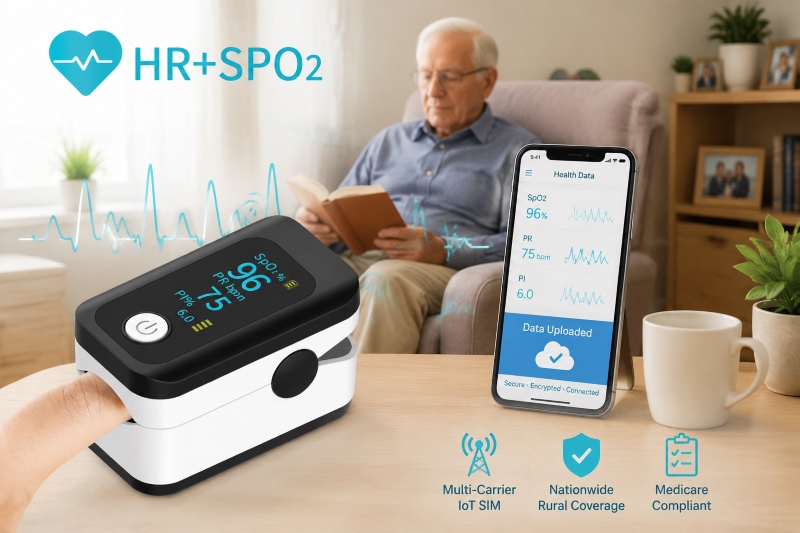
Our 4G LTE-enabled pulse oximeter is engineered precisely to address the unique deployment challenges faced by B2B Remote Patient Monitoring (RPM) Hardware buyers. As a dedicated Telehealth Equipment Provider, we recognize that managing chronic respiratory conditions requires friction-free, immediate diagnostic telemetry. By shifting from traditional, failure-prone Bluetooth pairing and smartphone-dependent syncing to an autonomous Cellular Medical Devices architecture, we deliver a true “zero-setup” finger-clip experience that transmits vitals instantly upon application.

This immediate data capture mechanism drastically mitigates patient drop-off rates within fragile or elderly populations, ensuring the uninterrupted 16-day physiological data streams necessary to satisfy Medicare compliance and secure CPT billing reimbursement (including CPT 99453 and CPT 99454). By mitigating hardware setup friction, we serve as a reliable technical infrastructure partner for enterprise telehealth organizations. 

Key Technical Specifications & Integration Capabilities

Clinical-Grade & Regulatory Compliance: FDA 510(k) K232989. The device utilizing advanced plethysmographic algorithms to deliver diagnostic-grade precision, supporting a critical SpO2 measurement range of 35% to 100% with a clinical accuracy of ±2% (70%–100% range) and pulse rate monitoring from 25bpm to 250bpm (±2bpm accuracy) to meet strict US healthcare validation protocols.

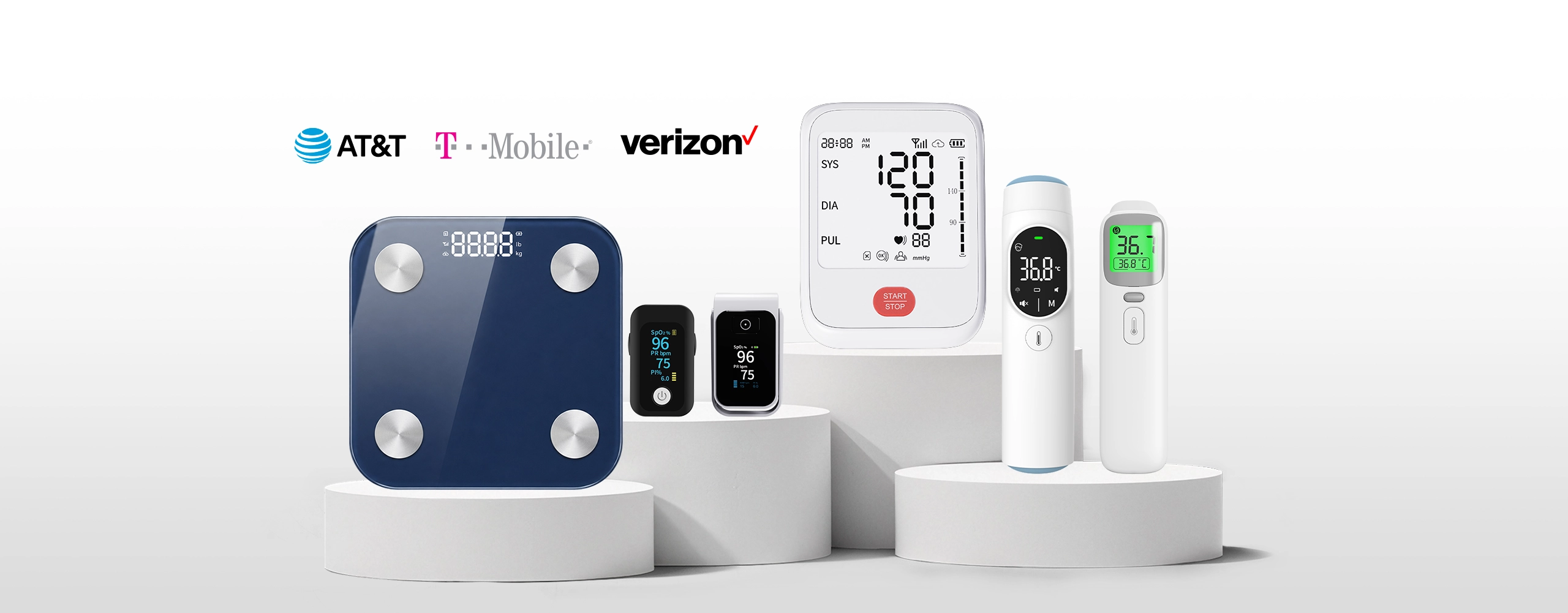
Seamless US Cellular Coverage & IoT Bands: Equipped with an integrated, multi-carrier IoT SIM card auto-connecting to top US networks, including AT&T, T-Mobile, and Verizon. It utilizes dedicated M2M/IoT cellular frequencies to guarantee encrypted, real-time data transmission directly to your cloud, ensuring robust connectivity even in remote or rural telehealth environments.

Developer-Ready Architecture (API/SDK): Designed for rapid deployment and platform interoperability. We provide a comprehensive API/SDK integration documentation summary. This allows your technical team to route patient vitals securely and seamlessly into proprietary RPM dashboards, customized clinic portals, or existing EHR systems within days, not months.

Patient-Centric Hardware Design: Features an industrial-grade yet minimalist aesthetic, including an oversized backlit LCD display with multi-directional view support, simple clip-and-measure operation, built-in threshold alert systems for abnormal SpO2/pulse readings, and a lightweight casing engineered for intuitive, patient-led home health monitoring.


By absorbing the intricate complexities of global cellular connectivity, rigorous regulatory compliance, supply chain logistics, and hardware accuracy, we are dedicated to providing a turnkey, end-to-end hardware solution for Remote Patient Monitoring (RPM) deployment.

Oximeter Normal Readings for RPM Remote Monitoring

Pulse oximeters are core vital signs monitoring tools for RPM (Remote Patient Monitoring) systems, tracking real-time blood oxygen saturation (SpO₂) and heart rate efficiently, and transmitting data to cloud platforms for medical follow-up. Below are the standard normal readings and key accuracy factors for reliable RPM health management:

Normal Pulse Oximeter Readings

SpO₂ (Blood Oxygen Saturation): The healthy normal range is 95% to 100% for general adults and stable chronic care patients.

Heart Rate (Pulse): For adults, the standard resting heart rate falls between 60 to 100 beats per minute (bpm).

For RPM remote monitoring purposes: SpO₂ readings below 92% signal a need for timely medical consultation, while levels at 88% or lower require immediate medical attention, and the RPM system will mark such abnormal data for prompt intervention.

Factors Affecting Accuracy (Critical for RPM Data Reliability)

  • To ensure valid RPM health data, note these common factors that impact oximeter accuracy:

    Skin Condition: Darker skin tones may slightly affect reading accuracy; consistent measurement habits are recommended for long-term RPM tracking.

    External Interferences: Nail polish, cold fingers, poor circulation, or slight movement during testing can distort readings, affecting RPM data authenticity.

    Device Grade: AOJ Medical offers medical-grade pulse oximeters with higher accuracy than regular consumer models, ensuring stable and credible data for professional RPM remote monitoring.

RPM 4G pulse oximeter

FAQs of RPM Pulse Oximeter

Key Considerations for Selecting a Finger Pulse Oximeter for Home Use & Remote Patient Monitoring (RPM)
  • Ergonomic clip structure suitable for adult fingers, delivering stable, consistent readings during regular home monitoring.
  • Medical-grade units with clinically validated accuracy, recognized and recommended by medical practitioners.
  • Intuitive operation paired with a clear, bright display for straightforward individual home operation.
  • Equipped with built-in Bluetooth or wireless connectivity that enables real-time synchronization of SpO₂ and pulse rate data to RPM cloud platforms for remote review and tracking by clinicians and caregivers.
  • Adopts a replaceable battery compartment structure, supporting convenient battery replacement as needed for long-term frequent daily use.
  • For patients with Chronic Obstructive Pulmonary Disease (COPD), consistent SpO2 monitoring is a core part of RPM remote chronic disease management.
  • The generally recommended target oxygen saturation range is between 88% and 92%, which may be adjusted based on personal health conditions and doctor’s professional advice.
  • Regular RPM-based oxygen tracking helps patients and medical teams evaluate treatment effects timely. If readings drop below 88%, it may indicate a need for supplementary oxygen or treatment plan adjustment. Always consult your physician to set personalized target levels, as factors like altitude, physical activity and overall health may affect readings. Stable oxygen monitoring via RPM helps prevent acute complications, relieve symptoms and improve life quality for COPD patients.
  • For healthy adults, the standard normal SpO2 range is 95% to 100%, meaning the lungs efficiently deliver oxygen to the bloodstream to support normal bodily functions. For those with respiratory or chronic conditions under RPM remote monitoring, the target range may vary per medical guidance.
  • Readings below 95% may signal insufficient oxygen supply and potential health risks. Long-term RPM tracking of oxygen levels allows early detection of abnormalities, enabling timely medical intervention. Always follow the specific advice from healthcare providers for personalized health management.
  • To ensure accurate, safe use of AOJ medical-grade oximeter for home and RPM monitoring, follow these key guidelines: Position the device properly on your finger with suitable tightness, test in a quiet indoor environment, stay still and breathe naturally during measurement, and avoid stimulants like coffee or tobacco before testing.
  • This device is a vital auxiliary tool for daily health and RPM remote monitoring, but it cannot replace professional medical diagnosis. Always refer to the user manual and consult medical staff for abnormal readings.
  • Strict safety precautions must be followed to avoid explosion risks: Do not use the oximeter near flammable anesthetics, explosive substances, flammable vapors or liquids, as sparks or electrical currents may trigger ignition and explosion.
  • Usage during MRI or CT scans is strictly prohibited: strong magnetic fields will cause device malfunction, and induced currents may generate heat and cause skin burns. Use the product only in safe, non-hazardous environments, and strictly follow manufacturer instructions and medical safety protocols to avoid accidents.
Featured Blood Pressure Monitor Post
Remote Vital Signs Monitoring Device for Hypertension
Jul 14,2026

In modern society, hypertension has become one of the most dangerous “silent killers” threatening global public health. Because the disease

Popular Posts
Latest News
Remote Vital Signs Monitoring Device for Hypertension
Jul 14,2026

In modern society, hypertension has become one of the most dangerous “silent killers” threatening global public health. Because the disease is often asymptomatic in its early stages, many patients remain completely unaware of their elevated blood pressure until severe target-organ damage—such as a major cardiovascular event—occurs. Driven by sedentary lifestyles, high-sodium diets, escalating mental stress, […]

cellular remote patient monitoring devices
Jul 07,2026

Hypertension often earns the dangerous title of the “silent killer.” Studies show that high blood pressure frequently presents no obvious symptoms during the early stages. However, leaving it completely uncontrolled over the long term drastically increases cardiovascular and cerebrovascular disease risks. Traditionally, patients logged their blood pressure readings manually using pen and paper. They would […]

cellular blood pressure monitor
Jul 02,2026

In the scaled deployment of enterprise Remote Patient Monitoring (RPM) initiatives, clinical data fidelity remains absolutely paramount. Automated telemetry ingestion and edge-connectivity uptime serve as the foundational drivers of operational ROI for modern healthcare providers. Engineered specifically as a pure-play B2B hardware solution, the AOJ ARM-90B Upper Arm Cellular Blood Pressure Monitor (BPM) addresses these […]

Contact Us

Interested in learning more? Contact us today!
Simply fill out the form below, and our dedicated Sales Team will reach out to you promptly.

Contact Us