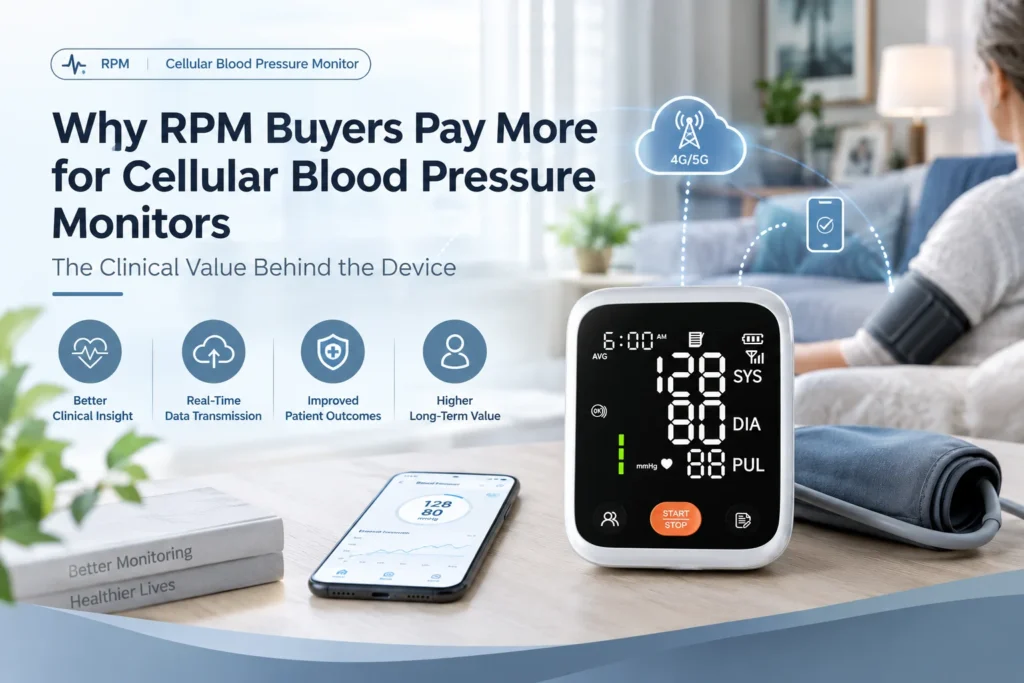

Choosing a home blood pressure monitor can feel overwhelming. Many people struggle to pick between upper arm and wrist models. Accurate tracking at home directly impacts your cardiovascular health management. Therefore, selecting the right design is critical for your daily medical checkups.
Major medical institutions recommend validated upper arm monitors for home tracking. However, wrist models offer excellent portability for people on the move. This engineering guide compares both styles to help you choose the best fit.
1. Core Comparison: Understanding the Two Designs
The chart below outlines the main technical and functional differences between the two configurations:
| Feature Dimension | Upper Arm Monitor Style | Wrist Monitor Style |
| Clinical Accuracy | Superior stability | High posture dependence |
| Portability Rating | Moderate for travel | Excellent for travel |
| Target User Group | Universal choice | Bariatric patients |
| Operation Difficulty | Standard cuff placement | Precise height alignment |
2. Why Upper Arm Devices Offer Superior Precision
The American Heart Association (AHA) recommends upper arm cuffs for home tracking. This preference comes down to blood vessel physics and anatomy.
 [Upper Arm Reading] ──> Measures Brachial Artery ──> Naturally Aligns with Heart Level ──> Highly Accurate
 [Wrist Reading]     ──> Measures Radial Artery     ──> Requires Precise Arm Positioning ──> Error Prone
Upper arm devices measure blood pressure at the brachial artery. This artery sits deep within your arm tissue, ensuring stable fluid readings. Furthermore, the upper arm naturally rests at the exact level of your heart. This natural alignment minimizes user positioning errors during measurement cycles.
Conversely, wrist devices measure the smaller radial artery near your hand. These narrower blood vessels sit closer to the skin surface, making them sensitive to movement. Consequently, even tiny body shifts can alter your final diagnostic numbers.
3. The Crucial Role of Posture in Wrist Device Performance
If you choose a wrist monitor, you must focus closely on your body posture. Your wrist must sit exactly at heart level during the test.
 Wrist Positioning Rules: Place Cuff Over Radial Artery
 ┌──────────────────────────────────────────────────┐
 │  get precise readings: Keep Monitor at Heart Level │
 └──────────────────────────────────────────────────┘
 Keeping your arm too low artificiality inflates your pressure data.
Holding your arm too low will falsely raise your blood pressure calculation. Likewise, placing your arm too high will yield artificially low tracking data. Wrist models react sharply to gravity and physical placement errors. Therefore, you must follow strict posture rules to get reliable tracking numbers.
4. Sourcing Options for Specific User Groups
Despite the accuracy advantages of arm units, wrist monitors serve specific practical needs.
                  Tailored Medical Sourcing Matrix:
   ┌──────────────────────────────────────────────────────────────────┐
   │ Bariatric Needs: Wrist Units Bypass Oversized Arm Cuff Limits    │
   ├──────────────────────────────────────────────────────────────────┤
   │ Mobile Professionals: Ultra-Light Wrist Devices Fit in Travel Bags│
   ├──────────────────────────────────────────────────────────────────┤
   │ Primary Tracking: Upper Arm Devices Manage Daily Hypertension    │
   └──────────────────────────────────────────────────────────────────┘
The Bariatric Patient Solution
Some individuals have very large upper arms or suffer from severe obesity. Standard arm cuffs might fit too tightly or fail to close properly. A tight cuff squeezes the arm incorrectly and alters your measurement data. For these individuals, a wrist monitor offers a comfortable, reliable testing alternative.
The Mobile Professional Blueprint
Frequent travelers often find standard arm monitors too bulky for compact luggage. Packing an extra wrist unit ensures you can check your health while traveling. Use your arm monitor at home, but carry a wrist style for quick trip updates. This hybrid approach keeps you safe without packing heavy gear.
Conclusion: Selecting Your Home Diagnostic Tool
Reliable health monitoring requires both clinical accuracy and everyday convenience. Do not rely on unverified tools for important cardiovascular measurements. Instead, choose a clinically validated sphygmomanometer for dependable results. Accurate readings help you track blood pressure with greater confidence. Moreover, consistent monitoring supports better long-term health management.
Explore AOJ’s advanced medical device portfolio today. Discover certified blood pressure monitors designed for home use. In addition, our products combine accuracy, reliability, and user-friendly operation.
Contact AOJ’s product support team for expert guidance. We will help you select the ideal monitoring solution for your family.