
Great thanks to Healthcare IT Today CEO John and HealthcareITToday.com for inviting us and sharing our understanding about RPM devices. AOJ Medical has kept trying to understand the RPM industry and vendors’ requirements deeply, and deliver valuable devices for our customers, including total hardware solutions for chronic disease management.
The following is the article by Jack Wang, the Vice President of AOJ Medical.
As RPM services and telehealth continue to expand across the healthcare industry, providers increasingly rely on connected monitoring technologies to deliver more efficient and personalized patient care. Today, many RPM and telehealth vendors have already developed specialized systems, applications, and service models for chronic disease management and long-term patient monitoring. At the center of these solutions, remote monitoring devices play a critical role by continuously collecting vital health data and supporting real-time clinical decision-making.
By continuously tracking patient conditions, healthcare providers gain a clearer and more data-driven understanding of overall patient status. As a result, they can identify potential risks earlier, improve care efficiency, and optimize treatment strategies with greater accuracy. Moreover, reliable monitoring devices help strengthen communication between patients and care teams while supporting long-term health management goals.
However, building a complete RPM ecosystem requires more than software alone. Vendors must carefully integrate multiple monitoring devices into broader healthcare platforms and workflows. Consequently, selecting the right hardware partners becomes a complex but essential process—especially for companies without experience in device engineering or manufacturing.
After working closely with RPM vendors for more than three years, the experts at AOJ Medical have developed practical insights and proven strategies to support more efficient decision-making. By combining reliable medical hardware with strong integration capabilities, healthcare providers can build scalable RPM solutions that improve patient outcomes and support the future of connected healthcare.
Principle 1: Evaluate the technical competence of the suppliers.
Due to the global supply chain division and cooperation, most hardware devices are from some manufacturing countries like China. Normally, there are no big differences in basic manufacturing competence among different suppliers in China. Most of them have their own manufacturing plants with high-cost materials and labor.
Despite the mature supply chain system, many factories have no self-owned R&D capabilities or only a few engineering people. They purchase the technical solutions, such as algorithms and software licenses, with no R&D or engineering capabilities on staff. This approach has a very high-cost performance for traditional retail markets, because there will be no continuous support for later online health care monitoring services after selling the devices.
For RPM services, the remote monitoring must be accurate, easy to use, have a good design, and have flexible software interfaces for integration. The traditional manufacturing type of suppliers will not be competent enough for RPM vendors. The key to dealing with this is to carefully evaluate the R&D competence of the device suppliers. For example, do they have a cross-functional R&D team which includes algorithm engineers, software engineers, hardware engineers, mechanism engineers, ID designers, and related laboratory and devices? During the evaluation process, requesting a questionnaire is a good start, and an on-site interview is also helpful to find the truth. That questionnaire can include things like how many engineers they have, the engineers’ background and education, etc.
Principle 2: Evaluate the regulatory competence of the suppliers.
RPM devices work as medical devices, which are governed by the FDA and related departments. When evaluating medical device suppliers, you should also evaluate their entire medical device quality system and regulation status.
First, the ISO 13485 and related quality system must be correctly built and executed during daily work. According to the administration rules, all procedures and records should be clearly documented and can be traced, and all the risk has been recognized and under proper control solutions.
Second, the FDA-cleared status should be well checked, not only the 510K, but also new issues with RPM devices, like whether cybersecurity principles and rules are fully performed, and all the security risks were tested by protocols, API, and SDK.
And last, normally, the traditional monitoring manufacturers only focus on manufacturing, even outsourcing the regulatory jobs to others, and they do not have capable teams in-house. You need to check whether they have an independent regulation department or teams that are responsible for building, training, and applying the medical device quality system and certifications.
Principle 3: Evaluate the software competence of the suppliers.
In the past, before the present RPM services, only a few devices had embedded software installed inside the independent monitoring devices. There were no outside connections. But for RPM devices today, the connection capability is a key function of the devices. When you integrate new devices from monitoring device factories, you should carefully check the software capabilities.
When you have your own software development teams, and you can solve the basic transition functions, you only need to check if the device protocols are fully defined and implemented, and with clearly described documentation. This will help your engineers to develop your own interfaces and modules.
When you want to fast-track your delivery and integration of new devices, a good approach is to get the SDK or API from the suppliers. The supplier SDK and API should have already implemented basic functions like connection management, device management, data management, and security management. Your engineers do not need to develop these functions again, and can instead just invoke and test the interfaces. Once the device is upgraded to new versions, all the interfaces should be forward compatible for your existing users.
Even if you have just start a trial market, you do not need to develop your own applications yet. Get early demo applications to verify your business model with nearly zero investment. If the suppliers can provide similar products, this is helpful to accelerate your business verification.
Principle 4: Evaluate the service competence of the suppliers
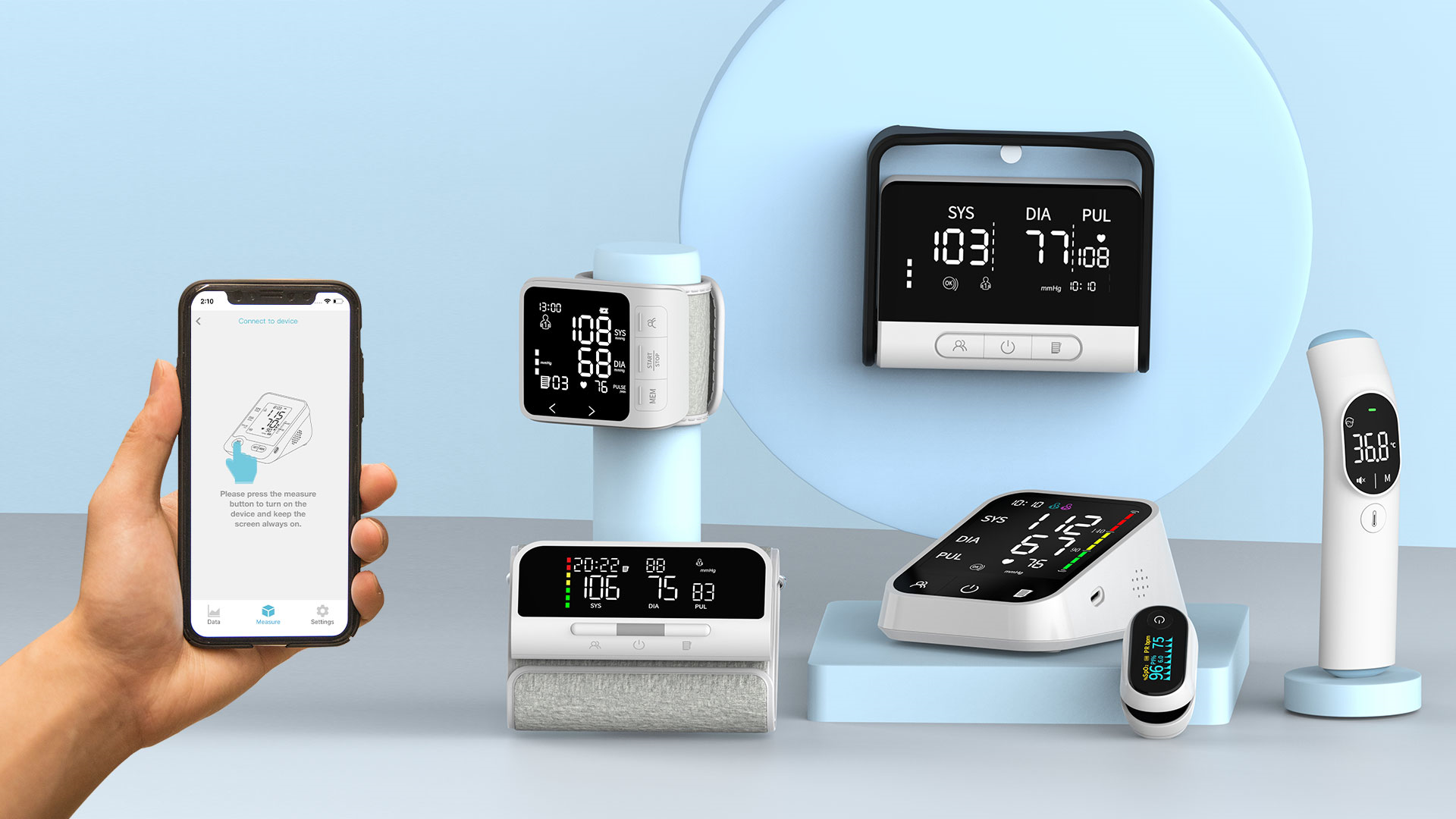
Most hardware device providers have traditional hardware product delivery services, including the entire ODM/OEM process. But for RPM device providers, how they understand the RPM vendor’s requirements is a key issue. Suppliers need to understand the market and the diseases. Take chronic cardiovascular diseases as an example. If the RPM device providers do not know about the healthcare insurance system and the treatment of remote patients, it will be very hard for the supplier to provide high-value functions and services.
On this point, you should not only check how they are professional in hardware manufacturing, but also check how they understand the medical details associated with chronic diseases. Normally, you can evaluate this important factor with a face-to-face interview, a check of the features they’ve developed, and understanding their customized requirements capability.
Further, how the supplier integrates the hardware, software, and services as solutions will be key to choosing the right RPM device suppliers. For example, at AOJ Medical, we work to align the RPM customers’ requirements and needs into comprehensive solutions. This kind of alignment will satisfy different kinds of customers and requirements.
We believe RPM and telehealth will keep changing the pattern of the health care industry, and choosing a good supplier will help you to be an outstanding company in changing times.