
In modern society, hypertension has become one of the most dangerous “silent killers” threatening global public health. Because the disease is often asymptomatic in its early stages, many patients remain completely unaware of their elevated blood pressure until severe target-organ damage—such as a major cardiovascular event—occurs. Driven by sedentary lifestyles, high-sodium diets, escalating mental stress, and the prevalence of metabolic syndrome, hypertension rates continue to surge and increasingly affect younger populations. This stark epidemiological trend demonstrates that the traditional episodic care model can no longer meet the urgent demand for efficient, precise hypertension management strategies.
Against this backdrop, this article explores how Remote Patient Monitoring (RPM) technologies break down spatial and temporal barriers to reshape the clinical monitoring and long-term care pathways for hypertension.
The Pitfalls of Traditional Hypertension Care and the Breakthrough of RPM
Within conventional chronic care pathways, hypertension control heavily relies on regular in-person clinic visits, self-directed lifestyle modifications, and long-term medication compliance. Maintaining stable, long-term blood pressure is critical to avoiding disease progression and preventing fatal complications such as stroke, myocardial infarction, or renal failure.
However, the traditional management chain has distinct limitations:
Geographical Barriers: Frequent travel back and forth and waiting in lines for appointments increase the cost and time burden on patients.
The “White Coat Effect”: Isolated blood pressure readings taken in a clinic setting are often skewed by patient anxiety, failing to reflect true blood pressure during daily life.
Communication Gaps: Daily blood pressure fluctuations, missed medications, and poor lifestyle habits outside the clinic often fall into a blind spot, leaving clinical decisions without continuous data support.
As a cornerstone of next-generation chronic disease management, RPM technology completely revolutionizes this dynamic. By establishing a 24/7 digital bridge, it transforms patients from passive recipients into active managers of their own health. Concurrently, it equips clinicians with continuous, real-time, and dynamic data insights, enabling precise interventions well before complications arise.
Core Drivers: The RPM Device Ecosystem Centered on Intelligent Sphygmomanometers
In modern, networked hypertension management, the AOJ Medical RPM Remote Patient Monitoring Blood Pressure Monitor serves as an indispensable foundation. By pairing this core device with specialized remote hardware, healthcare organizations can track patient vital signs with unprecedented breadth:
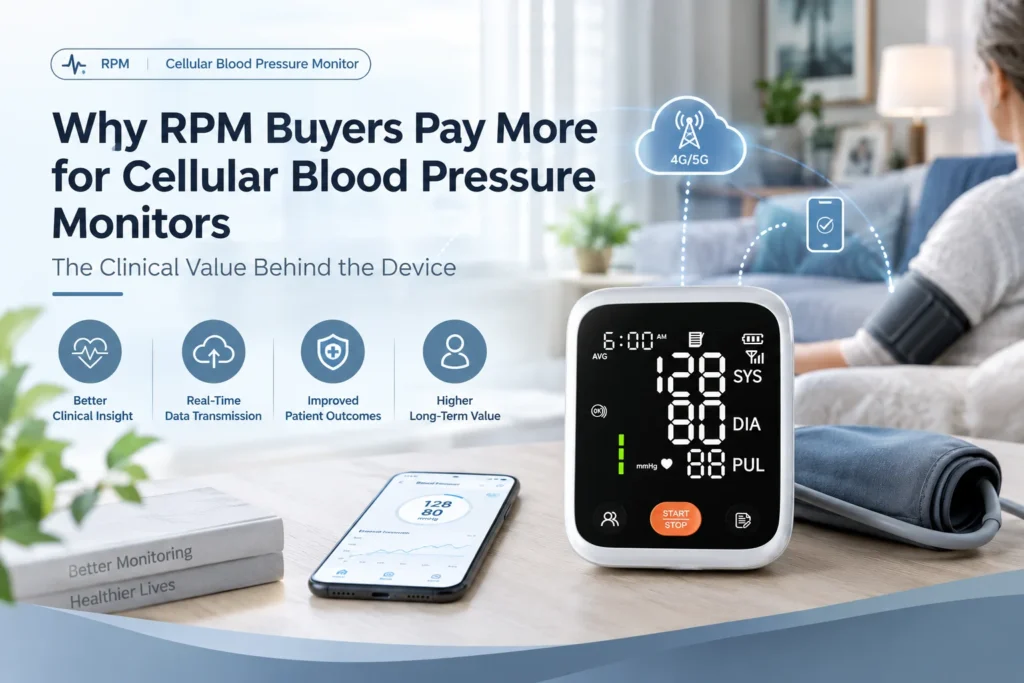
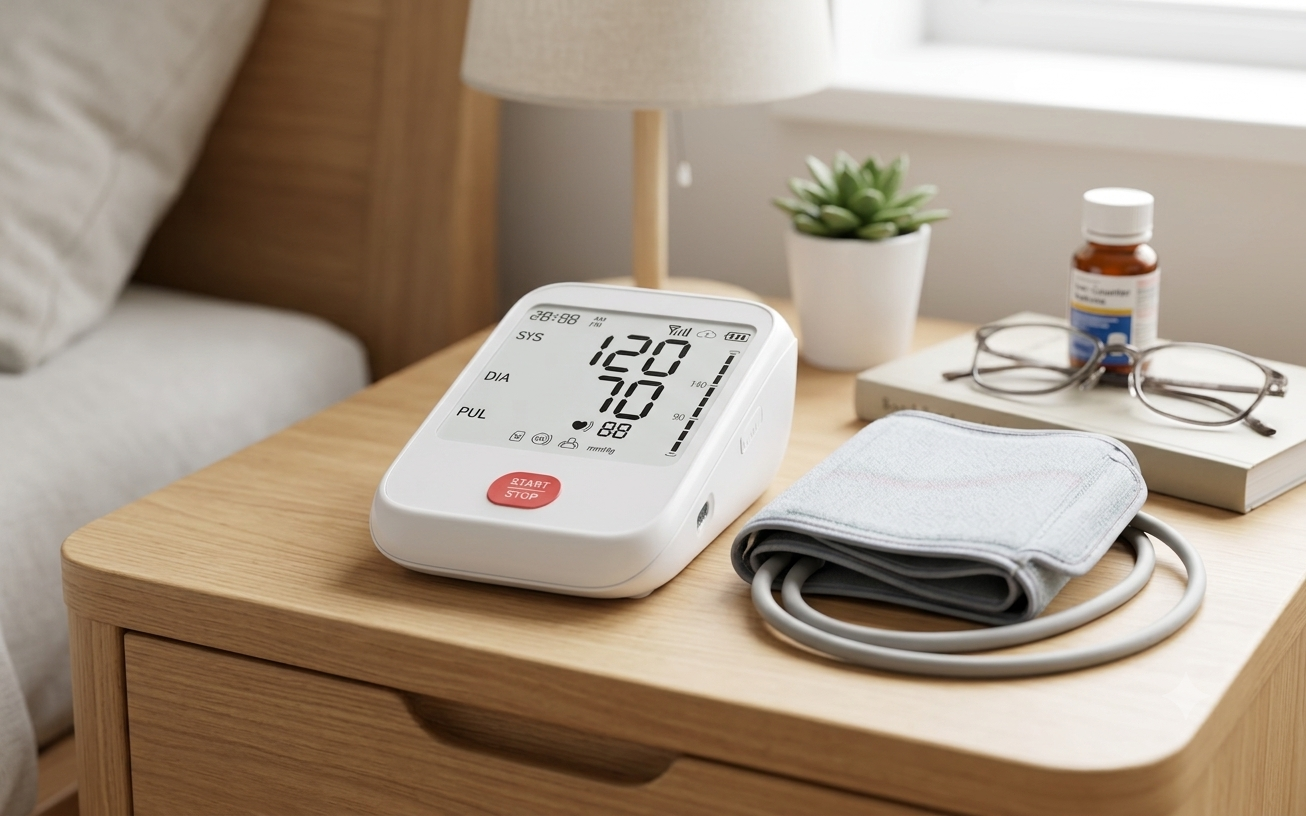
AOJ Medical RPM Remote Patient Monitoring Blood Pressure Monitor: This device eliminates the cumbersome traditional process of manual recording and transcribing. The moment a patient completes a measurement at home, vital data (systolic, diastolic, and pulse rate) is instantly, securely, and seamlessly uploaded to a cloud-based healthcare platform via a built-in wireless cellular network. This helps physicians capture hidden risks such as morning hypertension and non-dipping nocturnal blood pressure, while providing long-term trend charts to visually evaluate the efficacy of current antihypertensive regimens.
Smart Electronic Weight Scales: Body weight and obesity levels are critical factors influencing blood pressure fluctuations. Digital weight scales allow patients to easily record changes in weight and body composition, assisting physicians in identifying data trends and making timely adjustments to lifestyle or medical intervention plans.
Depending on individual patient needs, this system can be modularly expanded with other clinical-grade RPM hardware (such as pulse oximeters to monitor the risk of obstructive sleep apnea), weaving a comprehensive safety net for cardiovascular health.
Reshaping Lifestyle Compliance and the Medication Adherence Loop
Non-pharmacological interventions (sodium restriction, weight loss, regular exercise) and standardized pharmacotherapy are the twin pillars of hypertension control. RPM technology translates cold, clinical directives into engaging, daily compliance support.
By integrating with remote care software platforms, patients receive customized health guidance and actionable goals. Physicians can leverage real-time blood pressure and weight data to provide highly personalized, timely advice on lifestyle adjustments.
Regarding medication management, given that hypertension patients often require lifelong, punctual dosing, RPM works alongside Remote Therapeutic Monitoring (RTM) tools—such as smart pillboxes or automated app reminders—to provide intelligent medication alerts. These tools also report real-world adherence back to the clinical platform. If a dose is missed, the system can prompt swift intervention, drastically reducing the risk of dangerous spikes caused by abrupt, unmanaged treatment discontinuation.
The Core Value of RPM in Closed-Loop Hypertension Management
Integrating RPM deeply into clinical hypertension care delivers profound, transformative benefits to patients, providers, and the broader healthcare system:
Eliminating Measurement Errors for Smarter Decisions: Leveraging a wealth of continuous data captured across real-world home environments allows clinicians to design highly targeted, personalized dosing regimens.
Strengthening the Provider-Patient Bond to Drive Self-Management: Real-time data sharing allows patients to see the direct, positive impact of their daily efforts (e.g., dietary control, consistent sleep schedules) on their blood pressure, significantly boosting their engagement and sense of achievement.
Shifting Care Upstream with Early Warning Systems: If platform algorithms detect sustained abnormal elevations or volatile fluctuations in a patient’s blood pressure, proactive alerts are immediately dispatched to the care team, allowing physicians to adjust treatment plans before an adverse clinical event occurs.
Optimizing Clinical Resources and Lowering Care Expenditures: By reducing unnecessary clinic visits and avoiding preventable hospitalizations driven by hypertensive emergencies, RPM significantly mitigates the financial strain on both patients and healthcare payers.
Facing the global public health challenge of hypertension, the traditional model of care—reliant on sporadic, in-person consultations—has reached its limit. The future of hypertension control belongs to a personalized, continuous care era that is data-driven, seamlessly interconnected, and focused on active patient engagement.
Whether your healthcare institution, clinic, or care organization aims to improve clinical compliance rates among chronic disease patients, optimize clinical workflows for staff, or unlock new, compliant reimbursement revenue streams through RPM, AOJ Medical delivers a tailored, one-stop solution.
Backed by the robust data collection capabilities and high clinical precision of the AOJ Medical RPM Remote Patient Monitoring Blood Pressure Monitor, we help you seamlessly build an efficient, digital care loop for cardiovascular health.